Managing Universal Waste
Introduction
EPA finalized the universal waste rule on May 11, 1995 as a way of streamlining the recycling efforts of commercial and industrial groups. Under this rule, a hazardous waste generator has the option of designating certain hazardous waste as universal waste, making them subject to less stringent environmental regulations. These wastes are hazardous waste batteries, hazardous waste thermostats (such as mercury-containing thermostats), certain hazardous waste lamps, and certain hazardous waste pesticides.
States do have autonomy when it comes to the universal waste rule. They do not have to accept it, they can add or remove wastes, or they can have more stringent requirements. Thus, before you designate any hazardous waste as a universal waste, you will need to check with your state agency to see if they will allow it. Most states follow the federal rule.
EPA added all mercury-containing equipment, including mercury thermometers, to the federal list of universal waste in 2005.
This website has been created to help hospitals comply with the federal universal waste regulations found in 40 CFR 273.
Universal Waste Handlers
The federal universal waste rule establishes two types of universal waste handlers. The small quantity handler of universal waste (SQHUW) who accumulates less than 5000 kg of universal waste on site at any one time and the large quantity handler of universal waste (LQHUW) who accumulates 5,000 kg or more of universal waste. Please note that once you have accumulated 5,000 kg of universal waste on site, you will remain a LQHUW for the rest of the calendar year. So if you find yourself with 5,000 kg of fluorescent light bulbs in January, even if you got rid of all of them in February and never accumulated that much again, you would still be considered a LQHUW until next January. Also keep in mind that what type of universal waste handler you are is not calculated on a month by month basis like we do for hazardous waste generation but on the total amount of universal waste accumulated at your facility at one time.
EPA ID Number and Notification
Only large quantity handlers of universal waste (LQHUW) need to obtain an EPA ID number and send a written notification to EPA that includes:
-
A statement indicating that you are now a LQHUW;
-
The name of your facility;
-
Your street and mailing addresses;
-
The name and phone number of the person at your facility responsible for managing your universal waste; and
- The types and quantities of universal waste managed at your facility.

All handlers of universal waste, whether one fluorescent light bulb or a million fluorescent light bulbs, need to manage their universal waste in such a way as to prevent releases of the universal waste or component of the universal waste to the environment. For example, lamps, because they can easily break, must always be kept in containers or packages that are closed, structurally sound, adequate to prevent breakage, and compatible with the contents of the lamp.
Labeling
All handlers of universal waste need to mark or label the universal waste or a container of the universal waste for the purposes of identifying the type of universal waste and to let inspectors know that you have chosen to handle these hazardous wastes as universal wastes. An inspector will assume these wastes are hazardous wastes unless you clearly designate otherwise. The regulations give you the following labeling options:
-
Universal Waste ' Battery(ies); or Waste Battery(ies); or Used Battery(ies).
-
Universal Waste-Pesticides; or Waste Pesticides.
-
Universal Waste- Mercury Thermostat(s); or Waste Mercury Thermostat(s), or Used Mercury Thermostat(s).
-
Universal Waste-Lamp(s); or Waste lamp(s); or Used lamp(s).
Please note that you can not put a label on the wall. It must be either on the individual piece of universal waste or on the container in which the universal waste is stored.
Accumulation Time Limits
The federal universal waste regulations allow universal waste handlers to keep universal waste on site for a year. Although handlers can extend that period if they need more time to facilitate proper recovery, treatment, or disposal. For example, if your recycler will not pick up your universal waste until you reach a certain quantity, the law will allow you more than a year to accumulate that amount. You just need to show documentation to the inspector that you needed that longer period.
Given that there is a time limit on the storage of universal waste, all universal waste handlers need to be able to demonstrate the length of time the universal waste has been on-site. The regulation gives the following suggestions on how to do this but you can choose any method that works even ones not on the suggested list.
-
Labeling a container of universal waste with the earliest date that any universal waste in the container became a waste;
-
Labeling each individual waste with the date it became a waste;
-
Maintaining an inventory system on-site that identifies the date each universal waste became a waste;
-
Maintaining an inventory on-site that identifies the earliest date that any universal waste items or a group of containers of universal waste became a waste;
-
Placing the universal waste in a specific accumulation area and identifying the earliest date that any universal waste in the area became a waste.
Training
It should go without saying that all handlers of universal waste need to train their employees on the proper handling and emergency procedures associated with the universal waste managed at their facility. For instance, if you are storing fluorescent light bulbs, your employees should know what to do if one breaks.
Emergency Response
If there is a release of universal waste or a component of universal waste to the environment, one must immediately contain the release and then determine if any material resulting from the release (e.g. contaminated carpet, soil, personal protective equipment) is a hazardous waste and properly handle it as such.
Treatment
All universal waste handlers are prohibited from treating or diluting universal waste on site. There are some exceptions made for batteries and thermostats. For example, you are allowed to remove electrolyte from batteries and mercury containing ampules from thermostats and still handle the batteries and thermostats as universal wastes. However, there are no exceptions made for lamps. So if you have a bulb crusher on site, you cannot manage your lamps as universal waste, you must handle them as hazardous waste and comply with all applicable treatment requirements under RCRA.
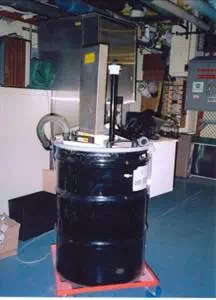
Furthermore, bulb crushers need to be operated in a manner that minimizes the potential for releases. For example, the bulb crushing operation shown in the photo 1 will not be acceptable to EPA since the ground glass from the bulbs will be strewn throughout the area and all over the equipment. On the other hand, the bulb crushing operation in photo 2 will be allowed because it contains all of the crushed glass and ensures that none of the materials from the bulb escapes into the atmosphere.
Photo 1:
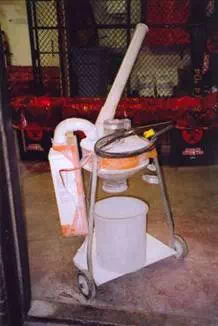
Photo 2:
Proper Disposal
In regards to disposal, all universal waste handlers can send their universal waste to either another universal waste handler, a destination facility which is defined by the regulations to be one who treats, recycles or disposes of universal waste, or a foreign destination. One, of course, must comply with all applicable Department of Transportation shipping requirements.
Please note that unlike hazardous waste, you can transport your universal waste from one handler to another so if you have several hospitals in an area, you can send your waste to one of the hospitals who would then send it on to the destination facility. By doing this you may be able to reduce your shipment costs if there is a discount for bulk deliveries.
Recordkeeping
As for recordkeeping, only large quantity handlers of universal waste (LQHUW) are required to keep records of where they are sending their universal waste and if applicable, any universal waste they are receiving from others. There is no specified form for these records. Use whatever works for you (i.e., logs, invoices, manifests, bill of ladings etc.).
The only requirement is that when a LQHUW is shipping universal waste off site, the records must show the name and address of the facility to whom the wastes are being sent; the quantities and types of waste they are sending that facility; and the date of shipment.
Similarly, if they are receiving wastes from other handlers, they must keep records of the names and addresses of the facilities sending them waste; the types and quantities of universal waste they are receiving from each facility; and when they received the waste.
These records must be kept for three years.
Managing Common Universal Wastes at Healthcare Facilities
The EPA defines a battery as a device consisting of one or more electrically connected electrochemical cells, which is designed to receive, store, and deliver electric energy. An electrochemical cell is a system consisting of an anode, cathode, and an electrolyte, plus such connections (electrical and mechanical) as may be needed to allow the cell to deliver or receive electrical energy. The term battery also includes an intact, unbroken battery from which the electrolyte has been removed.
Hospitals use batteries in equipment such as pacemakers, defibrillators, fetal monitors, heart monitors, pagers, telemetry devices, temperature alarms and blood analyzers, pumps, diagnostic equipment, otoscopes, opthalmoscopes, dictation machines, pen lights, glucometers, flashlights and telemetry devices. Batteries are used in portable generators, wheelchairs, lighting and a myriad of electronic devices.
Why Should Hospitals Recycle Batteries?' Batteries contain heavy metals such as mercury, lead, cadmium, and nickel. Lithium batteries, if discarded are hazardous waste due to being ignitable (D001), and reactive (D003). If batteries are not managed and disposed of properly, they can cause harm to the environment and to human health.
Resources for Reducing Battery Wastes:
EPA Fact Sheet: Disposal of Alkaline Batteries is intended for users of alkaline batteries. It describes how alkaline batteries should be handled, provided general information on regulations governing these batteries and gives suggested disposal procedures.
EPA's Universal Waste Website provides regulatory and comparative information about universal waste, how universal wastes are regulated in your state, guidance and recycling resources.
Fluorescent Light Bulbs
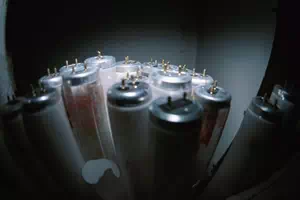
The EPA defines a 'lamp' also referred to as 'universal waste lamp,' as the bulb or tube portion of an electric lighting device. A lamp is specifically designed to produce radiant energy, most often in the ultraviolet, visible, and infrared regions of the electromagnetic spectrum. Examples of common universal waste electric lamps include, but are not limited to, fluorescent, high intensity discharge, neon, mercury vapor, high-pressure sodium, and metal halide lamps.
Hospitals operate all day, every day, year round. Fluorescent lamps can help hospitals significantly reduce their energy consumption. They use one quarter the energy of incandescent lamps and last as much as ten times longer. However, fluorescent lamps contain the toxic element mercury. When broken or improperly disposed of, fluorescent lamps may release mercury into the air, water and soil, and thus pose a threat to human health and the environment. While fluorescent lamps offer tremendous environmental advantages through energy savings, the disposal of used fluorescent lighting raises serious environmental concerns. Recycling spent mercury-containing lamps offers an environmentally sound alternative to expensive hazardous waste disposal. Recycling used fluorescent lamps is a good way to eliminate mercury emissions, as well as reduce waste and other toxic material disposal. Use the following resources to start or improve your recycling program.
Resources for Reducing Fluorescent Bulb Waste:
EPA's Universal Waste Website provides regulatory and comparative information about universal waste, how universal wastes are regulated in your state, guidance and recycling resources.
LampRecycle.org is a resource for any light bulb ("lamp") user seeking details on recycling spent mercury-containing lamps and is sponsored by the National Electrical Manufacturers Association (LAMP section).
Electronics
Technological advances in all electronic equipment, particularly computers, continually shorten their useful life, resulting in a complex and rapidly growing waste stream. Computers, televisions, lab analyzers, EKG monitors and other types of biomedical equipment contain many hazardous constituents ' from lead in cathode ray tube (CRT) monitors, chlorinated plastics in cable wiring, brominated flame retardants in circuit boards to mercury in LCD displays. CRTs alone contribute almost one third of the lead found in the municipal waste stream. Improper management or disposal of electronic equipment poses a significant threat to public health and the environment. Healthcare facilities need to manage their electronic equipment in a way that controls costs, protects data and complies with federal, state and local regulations.
The EPA is planning to add used CRTs from computers and television monitors to the federal Universal Waste Rule. In addition, EPA is currently developing a regulatory exemption for processed glass sent for CRT glass-to-glass recycling. Some states have already added CRTs to their lists of universal waste.
Resources for Electronics Waste:
EPA's Universal Waste Website provides regulatory and comparative information about universal waste, how universal wastes are regulated in your state, guidance and recycling resources.
National Recycling Coalition (NRC) has implemented an Electronics Recycling Initiative. This project is made possible with support from the U.S. Environmental Protection Agency and the U.S. Postal Service. The goal of the NRC's Electronics Recycling Initiative is to promote the recovery, reuse and recycling of obsolete electronic equipment, and to encourage the design, manufacture and purchase of environmentally responsible electronic equipment. *This site contains valuable fact sheets on managing, recycling and reuse options for electronic equipment.
World Computer Exchange (WCE) is an international educational nonprofit focused on helping the world's poorest youth to bridge the disturbing global divides in information, technology and understanding. WCE keeps donated computers out of landfills and gives them new life connecting youth to the Internet in developing countries
Mercury-Containing Equipment
Hospitals and healthcare facilities use equipment that contains mercury. Due to the very serious effects that mercury exposure and releases can have on human health and the environment, source reduction and mercury recycling have become a high priority at the federal, state and local levels. Indeed, some states have already banned products that contain mercury, if alternative, mercury-free products are available.
Mercury-containing equipment used in hospital and healthcare settings may include thermometers; sphygmomanometers; esophageal dilators; Cantor, Miller Abbott, and feeding tubes; dental amalgam; certain laboratory chemicals; and medical batteries. Mercury may also be present in cleaning solutions; batteries; fluorescent lamps; thermostats; pressure gauges and electrical switches.
Effective August 5, 2005, the EPA added discarded mercury-containing equipment (MCE) to the list of universal wastes. MCE means a device or part of a device (excluding batteries and lamps) that contains elemental mercury integral to its function, including: thermostats; barometers; manometers; temperature and pressure gauges; and mercury switches. EPA has concluded that regulating spent mercury-containing equipment as a universal waste will lead to better management of this equipment and will facilitate compliance with hazardous waste requirements. *The actual list of universal wastes in your state may include these items and/or different wastes. *The universal waste category of MCE incorporates thermostats from the original list.
Resources for Reducing Mercury Containing Equipment Waste:
EPA Mercury Website contains a section for healthcare facilities and provides resources relating to issues of particular concern to people who work in the health care industry, including the medical uses of mercury, programs to reduce the use of mercury, health effects of mercury, workplace safety, how to handle mercury spills, and proper disposal and treatment of mercury waste.
Health Care Without Harm is an international coalition of 437 organizations in 52 countries working to transform the health care industry so it is no longer a source of harm to people and the environment.